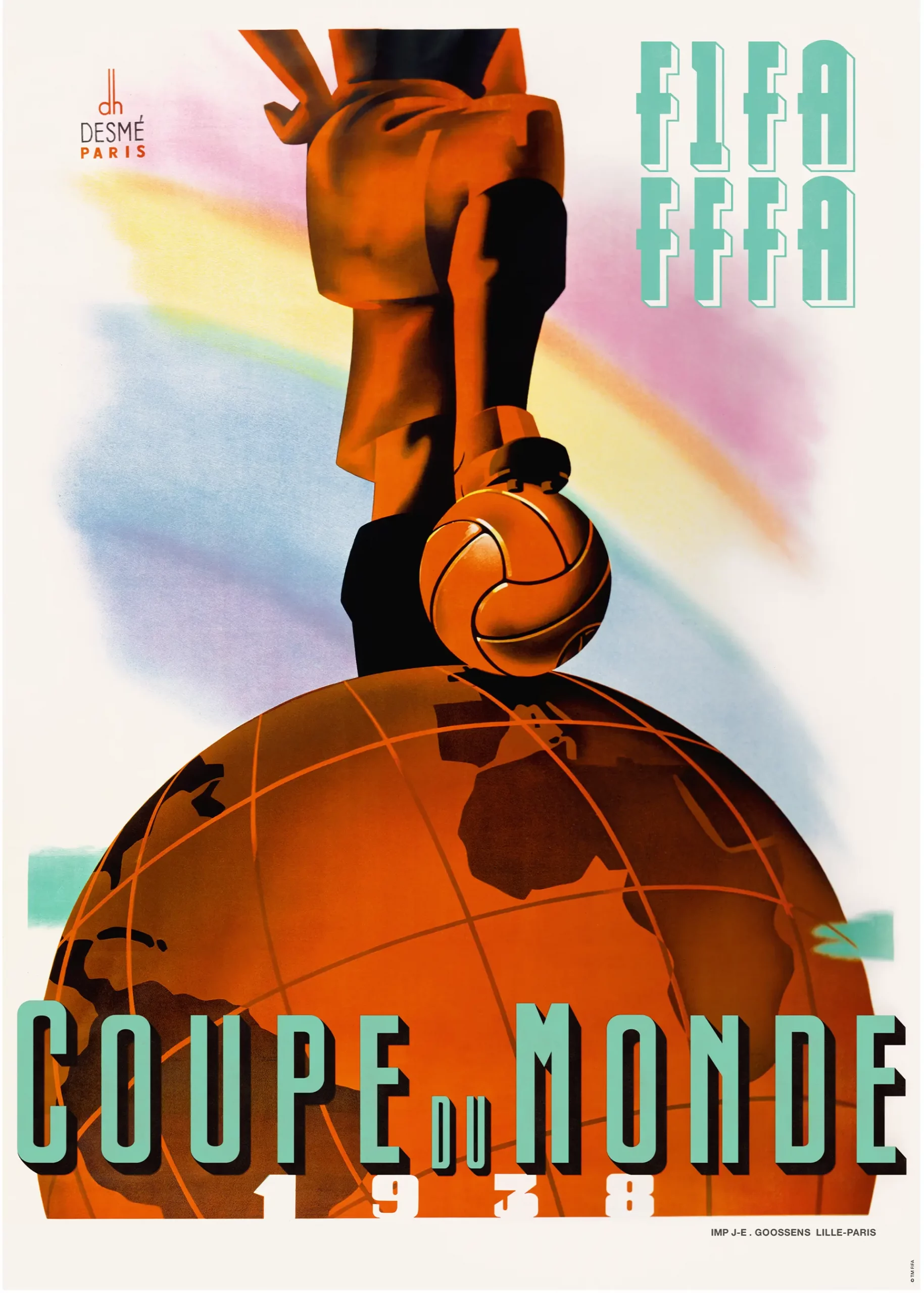
1938 France World Cup poster by Henri Desmé , photographer unknown, source Public Domain
This article is part three of our series detailing the history of the FIFA World Cup.
The third World Cup saw an even greater interest from around the world. France and Germany bid for hosting rights with the French winning the right to host the third edition. This World Cup was held amid rising tensions around the world, with Germany having annexed Austria, Spain in the middle of a civil war, and Japan aggressively expanding in the East. Fascism was also on the rise in Europe, with both Germany and Italy seeing political opportunities to tout their systems of governance.
In addition, various teams from the American continent refused to attend, protesting FIFA awarding Europe two consecutive World Cups rather than alternating it between the two continents (at that time, Africa and Asia had yet to throw their hats in the ring to bid for hosting rights).
Qualifying
Most of the South American teams, including Uruguay and Argentina, declined to take part in the competition after the controversy of the Peru v Austria match at the Football tournament of the 1936 Summer Olympics. Peru had won in overtime 4-2 and even had three goals disallowed, but the Olympic Committee ordered the game replayed, citing invasion of the pitch by Peruvian fans.
The United States and Mexico joined the qualifying rounds of this third World Cup, but eventually withdrew. Argentina submitted a late application (which was accepted), before a definitive withdrawal due to disagreements between the National Federation and the local clubs. Spain was unable to participate due to their ongoing civil war (which also had covert and overt participation by France, Italy, Germany, and the Soviet Union).
Despite this strife, 16 teams eventually qualified. However, only 15 participated since Austria withdrew due to their annexation by Germany. This would eventually also have an impact on Germany’s performance during the tournament, but the event would still see some very high-quality matches that further drove the interest of the World Cup to a global level.
The final list of participating countries was:

1938 France World Cup participants, table courtesy of Jose F Guerra
The Tournament
The matches would be played in eight cities. The final would be played in Rome in the Stadio Nazionale PNF that had a capacity of 47,300 (PNF was an abbreviation for Partito Nazionale Fascista).
Some of the firsts in this tournament were:
- defending champions, Italy, were automatically qualified
- host nation was automatically qualified
- first withdrawal due to political reasons (Austria annexed by Germany)
- debuts of Cuba, Dutch East Indies (currently Indonesia), Poland, and Norway
- knockout format only (no group stage)
- players wore numbered shirts.
- Ernst Loertscher of Switzerland became the first player to be officially credited with an own goal during a World Cup match
Five of the seven first round matches went into overtime and even then, two of those games went to replays. In one of those replays, Cuba advanced to the next round by beating Romania 2-1. In the other replay, Germany was beaten by Switzerland 4-2 despite being ahead 2-0 in the first half. It was in this game that the German head coach, Sepp Herberger, blamed the five Austrian players (their country had been annexed by Germany) for having a “defeatist attitude.” Until they were knocked out of the group stages in 2018 and 2022, this was the only time Germany had failed to advance past the first round.
Sweden advanced directly to the quarter-finals because of Austria’s withdrawal and then beat Cuba 8–0. The hosts, France, were beaten by the defending champions, Italy, and Switzerland were seen off by Hungary. Czechoslovakia and Brazil went into overtime where Brazil overcame the depleted Czech team (two of their key players had suffered broken bones in the first game). This was the last match to be replayed in a World Cup.
Hungary overwhelmed Sweden in one of the semi-finals 5–1, while Italy and Brazil had the first of their many World Cup clashes in the other. The Brazilians were without their star player Leônidas, who was injured, and the Italians won 2-1. Brazil beat Sweden 4–2 for third place.
Relevant Players
- Silvio Piola (Italy)
- Leonidas da Silva (Brazil)
- György Sárosi (Hungary)
- Jean Nicolas (France)
The Final
The final was held on June 19 at the Stade Olympique de Colombes in Paris, where Italy faced Hungary. Italy struck early with Gino Colaussi scoring in the 6th minute, but Hungary quickly equalized through Pál Titkos. Italy regained the lead almost immediately with Colaussi’s second goal, and Silvio Piola added another before halftime. Hungary fought back with a goal from György Sárosi, but Piola sealed the victory with his second goal, making the final score 4–2.
This win marked Italy’s second consecutive World Cup title, making them the first team to achieve back-to-back championships. The match was notable for its fast pace and attacking play, with Italy’s tactical discipline and counterattacks proving decisive. It was also the last World Cup before World War II, and Italy played in black shirts as a political gesture under Mussolini’s regime. The tournament itself was overshadowed by political tensions, but the final showcased Italy’s dominance under coach Vittorio Pozzo, who remains the only manager to win two World Cups.
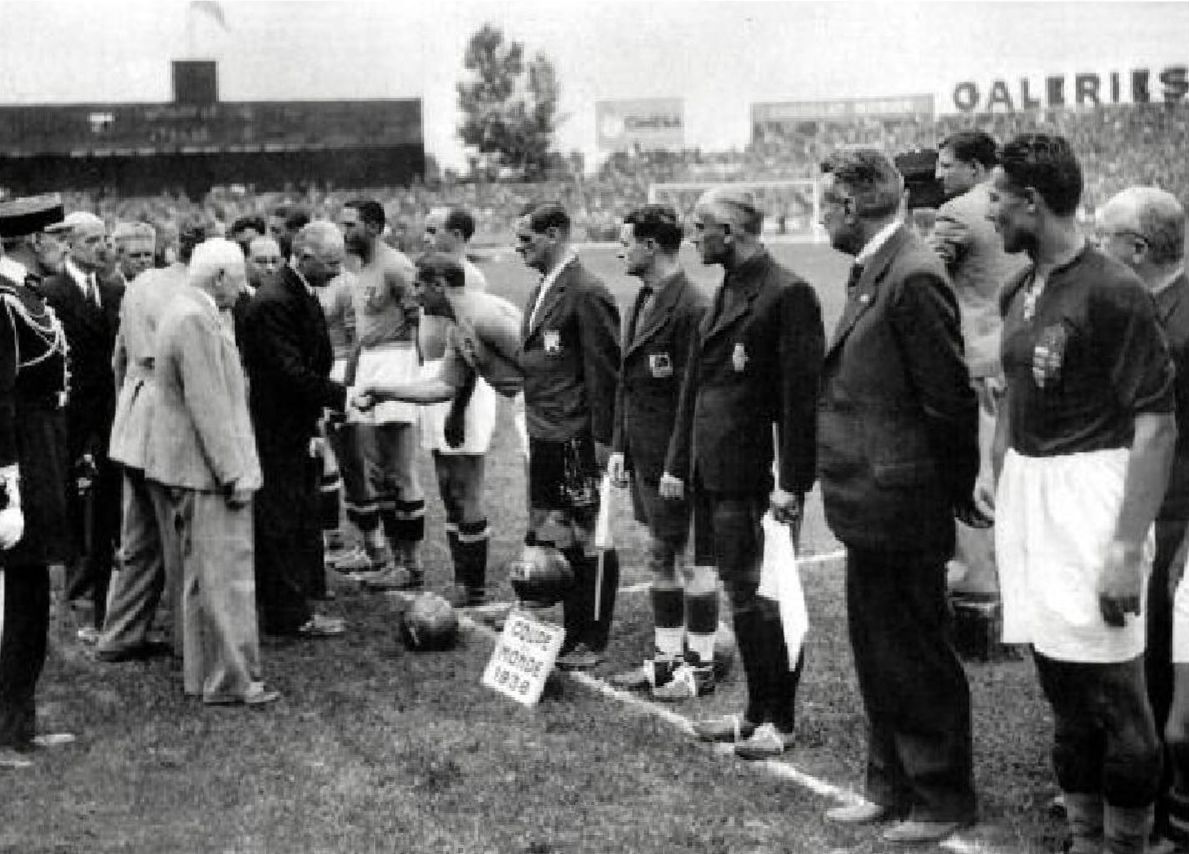
Pre-match ceremony before the 1938 FIFA World Cup Final between Italy and Hungary at Stade Olympique de Colombes, Paris, France. (photographer unknown, source public domain)
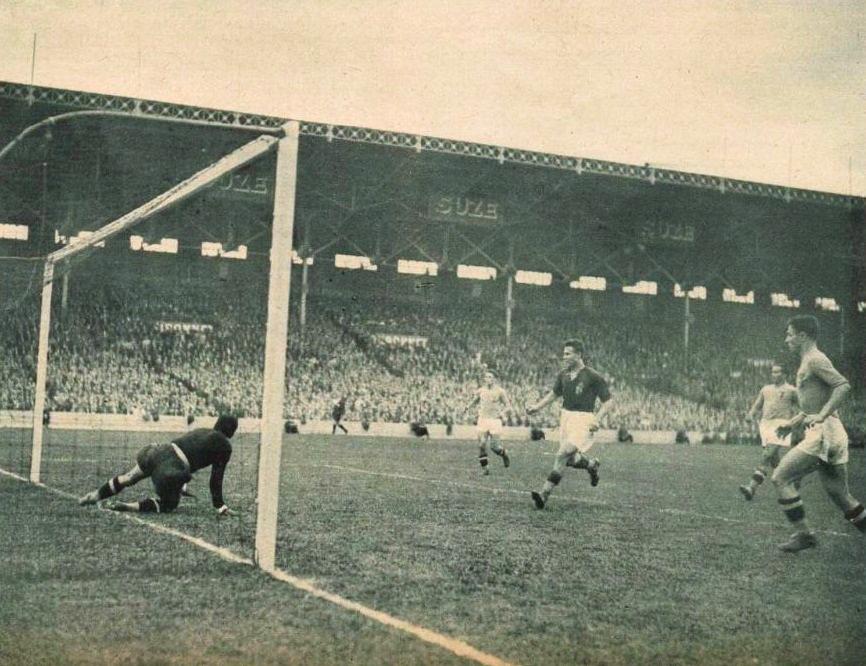
Action from the 1938 World Cup final between Italy and Hungary (photographer unknown, source Le Miroir des sports)
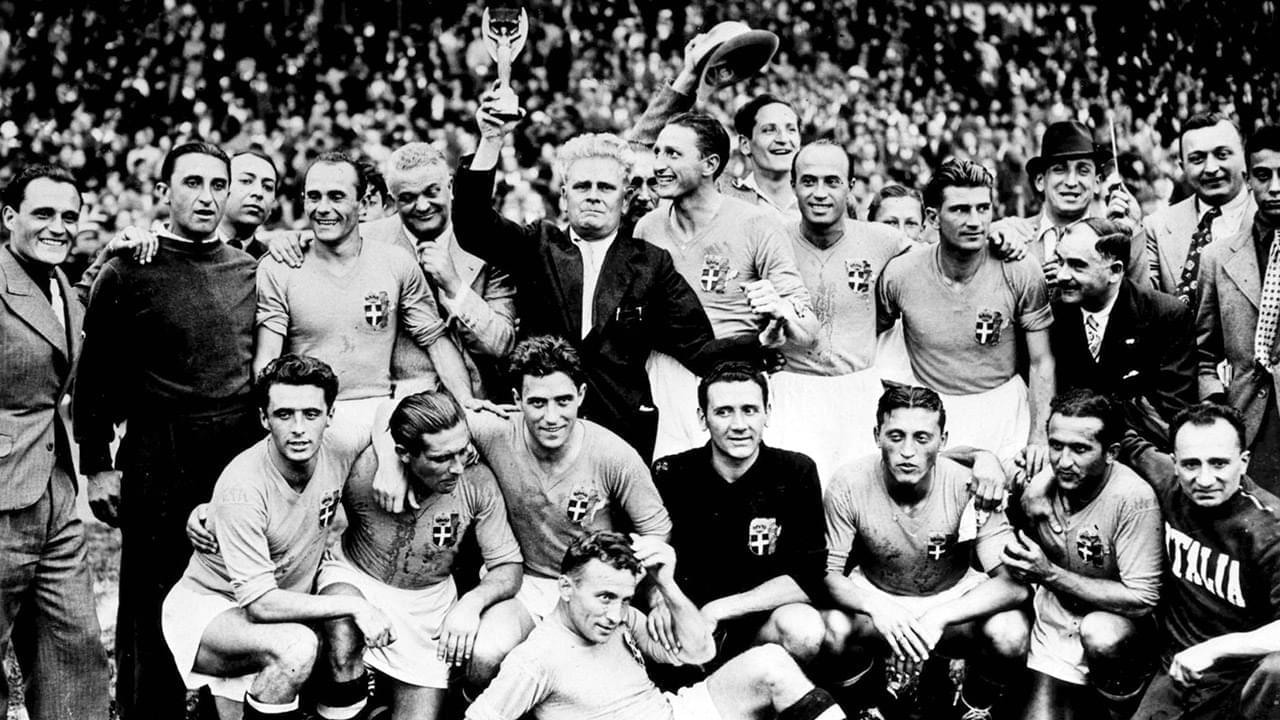
Italy’s national football team celebrating their victory after winning the 1938 FIFA World Cup at Stade Olympique de Colombes, Paris, France (photographer unknown, source public domain)

Recommended for you